To make the most of your investment, you will need a proper instrument at home to practise on. Practising at home is the key to good progress: [at least 3 times a week, in addition to our weekly lesson. Confirm minutes].
Acoustic is ideal
An acoustic piano is ideal. Digital pianos sound and feel very different, and we work a lot on technique and sound, work that can only be done properly on an acoustic piano. I know that is not an option for everyone. Space and maintenance can seem scary, but a small upright piano (pianoforte verticale) takes not much more space than a digital piano. If you rent it, normally around €60 to €100 a month, the shop looks after tuning and maintenance, which is needed only once or twice a year.
Renting and buying
Renting (noleggio) gets you a better instrument at a much lower price, perhaps an acoustic with a "silent" function for practising. Some can be rent-to-own. Buying: a good second-hand piano, bought and transported, costs about €2,000 to €10,000 depending on budget. I have a couple of contacts who sell restored second-hand pianos. Where to rent (or buy new) in Milan: Scorticati Pianoforti, Griffa e Figli, Pedroli, Tagliabue Pianoforti. For more choice: Cavalli Pianoforti (outside Milan) and Bettin Pianoforti (Padua), both with huge warehouses. [Owner to confirm: shop names may be published, no commission, prices re-checked.]
Digital
If that is not possible, some digital pianos are fine to begin with: the Yamaha Arius YDP-143 or the Casio PX-760. With a digital piano make sure it has a good stand, pedals, and an adjustable piano stool. [Owner to re-check the two models.]
Footstool and posture
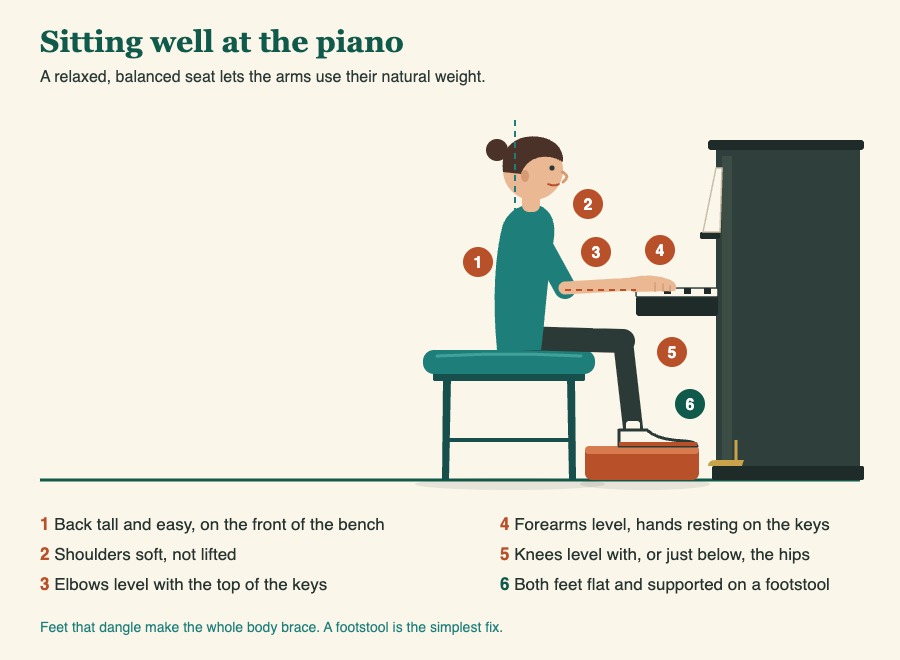
Children also need something under their feet until they can reach the floor: any footstool will do, maybe you have one at home. In the Russian piano tradition, a relaxed, balanced posture is essential, especially for young beginners. If a child’s feet dangle, the whole body becomes unstable, the child braces with tension in the shoulders and back, and it is harder to play with relaxed, coordinated movement. A footstool lets the feet rest firmly, so the arms and hands can use their natural weight, and children concentrate for longer. Seat height: the elbows sit a little above the keys, and the forearms slope gently down to the hands.